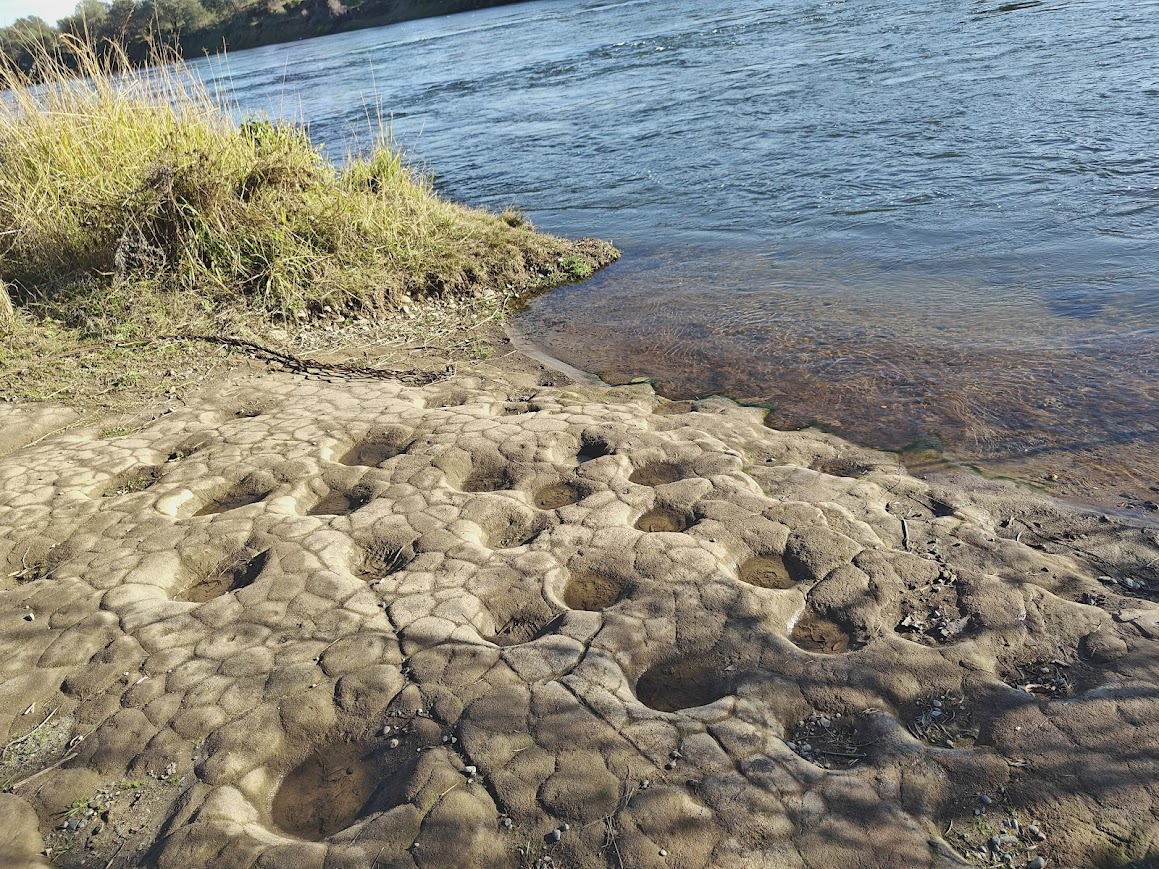
bedrock mortars on the shoreline of Sailor Bar
The Nisenan People
For thousands of years, the lower American River was home to the Nisenan people — village-based communities whose lives were woven into the rhythms of the river. They practiced seasonal movement tied to natural cycles and possessed deep ecological knowledge and stewardship of the land. The river was central to life — providing food, materials, and cultural identity.
Daily Life
Staple foods included acorns, salmon, deer, seeds, and berries. The Nisenan crafted tools from stone, bone, and plant fibers, and maintained extensive trade networks with neighboring peoples.
One of the most important cultural features at Sailor Bar is the presence of bedrock mortars — small, rounded depressions ground into flat rock surfaces. These features can still be found in parts of the American River Parkway and are powerful evidence of long-term Nisenan presence.
What Are Bedrock Mortars?
- Bowl-shaped holes worn into granite or other hard rock
- Created over generations by repeated grinding
- Often found in clusters, indicating communal food preparation areas
How They Were Used
The Nisenan relied heavily on acorns, which require careful processing to make them edible.
Step-by-Step Acorn Processing
- Gathering — Acorns were collected from oak trees in the fall. Different oak species provided slightly different flavors and qualities.
- Drying and Storage — Acorns were dried and stored for year-round use.
- Shelling — Outer shells were removed by hand.
- Grinding in Bedrock Mortars — Acorns were placed into the mortar holes. A pestle (a hand-held stone tool) was used to pound and grind them into meal. Repeated use over centuries deepened the mortar holes.
- Leaching (Critical Step) — Ground acorn meal contains tannins, which are bitter and toxic. Meal was placed in sand basins or baskets, and water was poured over it repeatedly to remove the tannins.
- Cooking — The resulting flour was cooked into mush, soup, or bread-like foods.
Cultural Importance
- Acorns were a dietary staple, providing reliable nutrition
- Grinding was often a communal and social activity
- Mortar sites were gathering places, often used for generations
What Visitors Should Understand
- Bedrock mortars can represent hundreds of years of continuous use
- They are cultural resources and should never be touched or disturbed
- They connect directly to living descendants of the Nisenan people
Salmon was a Vital Food Source
The Nisenan people relied on salmon as a vital, staple food source and cultural cornerstone, harvesting them from the river using weirs, nets, and harpoons. Salmon was a major seasonal food source that was dried, smoked, or pounded into flour for storage, allowing the Nisenan to maintain food security throughout the year.
Along with acorns, salmon was one of the most important foods for the Nisenan, who established permanent villages near salmon-producing rivers and honored them through traditions. The Nisenan treated salmon with profound respect, viewing the returning fish as a gift that demanded sustainable practices and ceremonial honor.
Impacts of the Gold Rush on the Nisenan People
Displacement and Loss of Land
The arrival of miners during the Gold Rush had devastating consequences for the Nisenan people. Thousands of miners flooded into the American River region beginning in 1848. Traditional Nisenan lands along the river were quickly occupied, mined, and settled. Villages were destroyed or abandoned as access to land and resources was lost.
Destruction of Food Sources
Mining operations severely disrupted the natural environment:
- Salmon runs declined due to water diversion, sediment, and habitat destruction
- Oak woodlands and plant resources were damaged or cleared
- Game animals were overhunted or driven away
This led to widespread food scarcity and starvation among the Nisenan.
Violence and Disease
Many Native people faced violence from miners and settlers. There were documented massacres and forced removals throughout Northern California. Introduced diseases (such as smallpox and measles) spread rapidly, as Native populations had no immunity. The population of Native Californians declined dramatically during this period.
Loss of Culture and Lifeways
Traditional seasonal movement and cultural practices were disrupted. Sacred sites and village locations were destroyed or made inaccessible. Many Nisenan people were forced into labor or relocated to missions and ranches.
Resilience and Continuity
Despite these hardships, the Nisenan people endured:
- Descendants of the Nisenan still live in the region today
- Cultural traditions, ecological knowledge, and connections to the land continue
- There are ongoing efforts to revitalize language, culture, and land stewardship practices