Along the American River at Sailor Bar, among the willows, oaks and other native plants, grow shrubs that can easily be overlooked. They are blue elderberries—plants with a remarkable connection to the people, wildlife and natural history of the American River.
For generations, Native people of the Sacramento Valley recognized elderberry as a plant with many gifts. Today, the same shrubs provide food and shelter for wildlife and serve as the only known host plant for the Valley Elderberry Longhorn Beetle, a federally threatened species found only in California’s Central Valley.
The elderberry is much more than a shrub. It is part of the living history of Sailor Bar.
A Plant Important to the First People of the American River
Long before Sailor Bar became a place for gold miners, dredges, hikers and fishermen, the American River was home to Native people whose lives were intimately connected to the plants and animals of the river valley.
The Sacramento Valley was—and remains—the homeland of the Nisenan and other Native peoples. Their knowledge of the landscape included an understanding of when plants should be harvested, how they could be used, and how people could live within the natural cycles of the land.
Elderberry was one of those important plants.
The Nisenan name for elderberry is nok. Traditional knowledge recorded among the Nisenan and neighboring Maidu communities describes many uses for elderberry. Its berries could be gathered and preserved, while its straight, relatively soft branches could be fashioned into useful objects and musical instruments.
Across California, Indigenous peoples used elderberry for food, medicine, dyes and tools. The flowers and other portions of the plant had medicinal uses, while the hollow stems were particularly useful for making musical instruments.
This relationship with elderberry was not simply one of taking resources from the landscape. Traditional ecological knowledge emphasized timing, care and balance. Native people actively managed many plant communities, using practices such as carefully timed burning to maintain productive landscapes.
And this relationship has not disappeared.
Native people are still here. Contemporary Nisenan, Maidu and other California Native communities continue to maintain cultural connections with elderberry and the landscapes in which it grows. As one Native ethnobotanist has expressed, elderberry is part of an ecological relationship involving the plant, the insect and people—not simply a resource for one of them.
A Feast for Wildlife
Elderberry is also an important part of the American River’s riparian ecosystem.
Its flowers provide nectar for insects and other pollinators. Later in the year, its clusters of berries become food for birds and other animals. Elderberry shrubs also provide cover, nesting habitat and perches.
Blue elderberry is used by a wide variety of wildlife, including numerous species of birds and mammals.
That makes the elderberry especially valuable at Sailor Bar, where riparian vegetation, oak woodland, meadow and river habitats occur together.
The Friends of Sailor Bar has documented the remarkable wildlife diversity of the park, including more than 200 species of birds as well as mammals such as deer, foxes, coyotes, beavers and river otters.
The elderberry is one small but important piece of this larger web of life.
And Then There Is the Beetle
Perhaps the most surprising creature associated with Sailor Bar’s elderberries is one that most visitors will never see.
Meet the Valley Elderberry Longhorn Beetle
Desmocerus californicus dimorphus
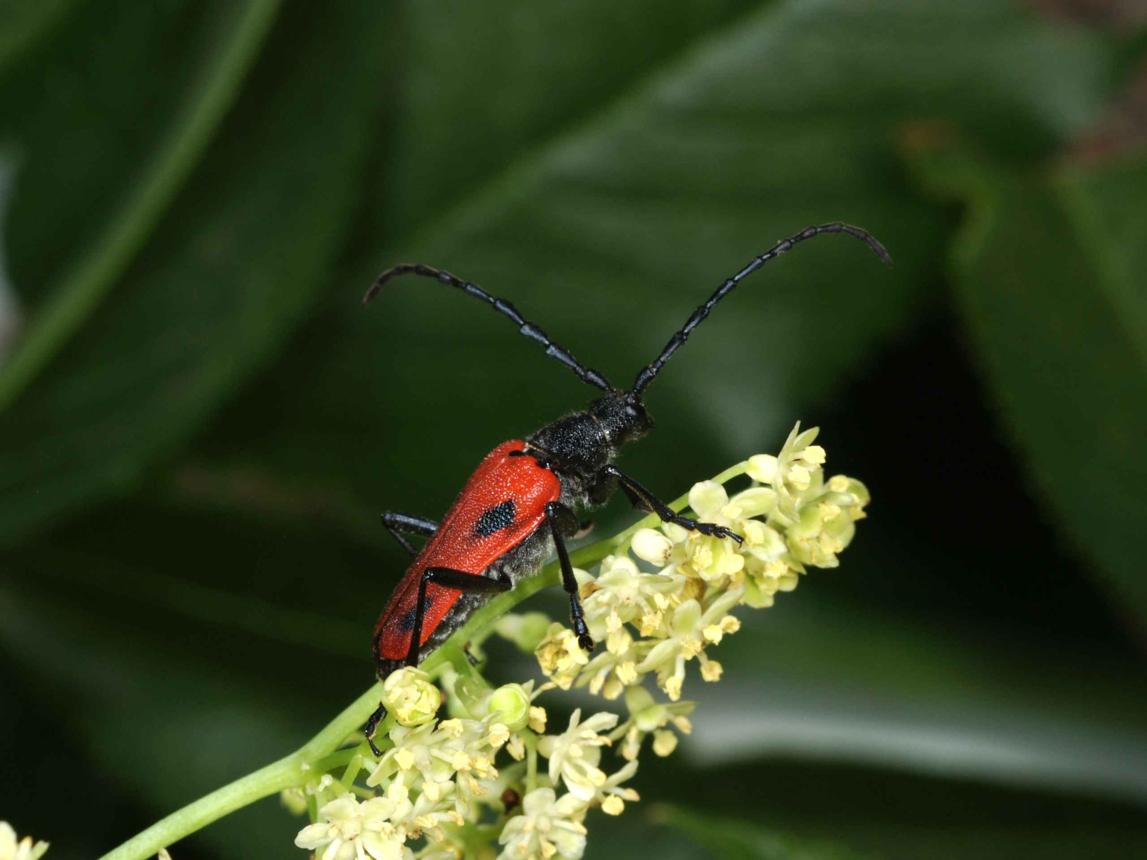
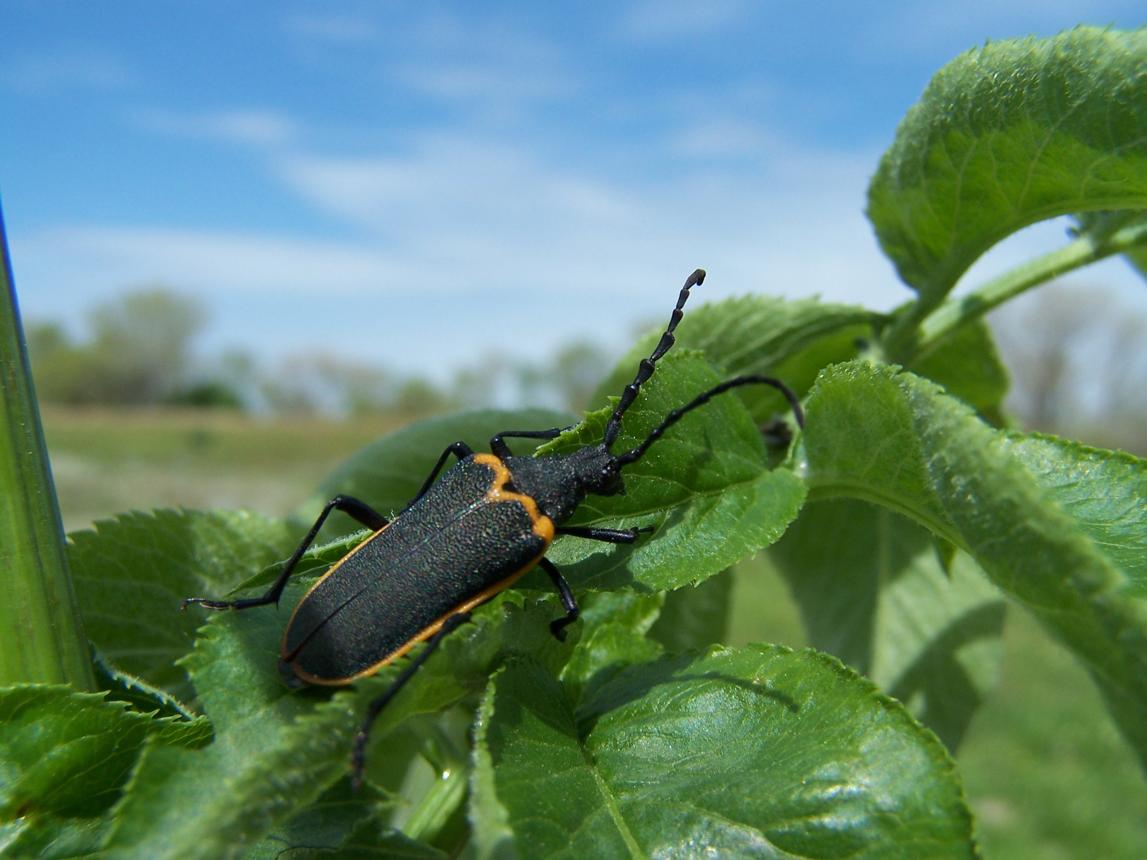
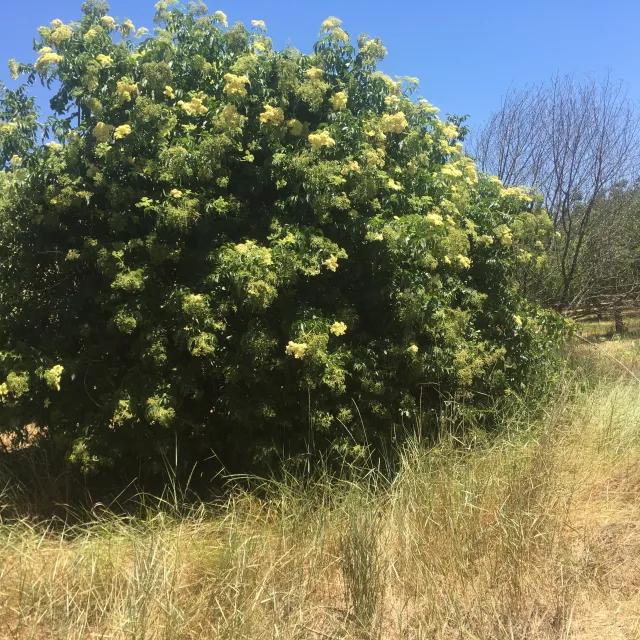
This colorful beetle is found only in California’s Central Valley and depends on elderberry for essentially its entire life cycle.
That makes the relationship extraordinarily specialized:
No elderberry → no elderberry beetle.
The beetle spends most of its life hidden inside the stems of elderberry shrubs.
Adult beetles lay their eggs on elderberry foliage. The tiny larvae then bore into the stems, where they feed and develop within the soft inner pith. Eventually, after completing their transformation, adult beetles chew their way out of the stems.
The small round openings that appear in older elderberry stems can therefore tell an important story.
They may be evidence that a beetle has completed its development and emerged from the shrub.
The U.S. Fish and Wildlife Service notes that many records of the beetle are based on these exit holes, because the beetle itself spends so much of its life concealed inside elderberry stems.
Look—but don’t disturb
If you see holes in an elderberry stem, don’t poke a stick into them or break open the branch to see what’s inside.
The stem may be home to a beetle.
A seemingly ordinary elderberry bush can contain an entire hidden world.
Why Did the Beetle Become Threatened?
The story of the elderberry beetle is also a story about what happened to California’s rivers.
The Central Valley once contained enormous expanses of riparian forest. Over time, much of this habitat was cleared, altered or fragmented.
When the Valley Elderberry Longhorn Beetle was listed as threatened under the federal Endangered Species Act in 1980, it was known from only a handful of locations. One of those early locations was the American River in Sacramento County.
Today, the beetle is known from considerably more locations, but its dependence on elderberry remains.
And that is why protecting elderberry shrubs matters.
The American River Parkway Natural Resources Management Plan specifically recognizes elderberry habitat as important for the beetle, and elderberry restoration has occurred at several locations along the Parkway, including Sailor Bar.
A Shrub That Connects Past and Future
Standing beside an elderberry at Sailor Bar, it is easy to see only a shrub.
But look a little closer.
Its berries connect us to the people who lived along the American River for thousands of years.
Its flowers and fruit connect it to birds, insects and other wildlife.
Its stems may shelter a beetle that spends almost its entire life hidden from view.
And its presence connects today’s American River Parkway with the native riparian forests that once covered much more of the Central Valley.
One plant. Three stories.
Culture. Wildlife. Conservation.
That is why the elderberry deserves our attention.
Help Protect Sailor Bar’s Elderberries
When visiting Sailor Bar:
- Stay on established trails where possible.
- Do not cut, break or collect elderberry branches.
- Do not disturb holes in elderberry stems. They may be evidence of the Valley Elderberry Longhorn Beetle.
- Leave berries, flowers and branches for the wildlife and insects that depend on them.
- Take photographs rather than specimens.
- Help others understand why these seemingly ordinary shrubs are important.
The best way to experience Sailor Bar is to leave its natural communities intact for the next visitor—and for the wildlife and plants that call the American River home.
A final thought
The next time you walk past an elderberry at Sailor Bar, stop for a moment.
Look at the flowers. Look at the berries. Look closely at the stems.
You may be standing beside a plant that has provided food and useful materials to Native people for generations—and that may, right now, be sheltering a beetle that exists nowhere else on Earth.
At Sailor Bar, even an ordinary-looking shrub can have an extraordinary story.